A construction or demolition project in Columbia generates debris volume that moves faster than a pickup truck can haul it. A single roof tear-off on a Heathwood bungalow produces 15 to 25 squares of shingles, roughly…
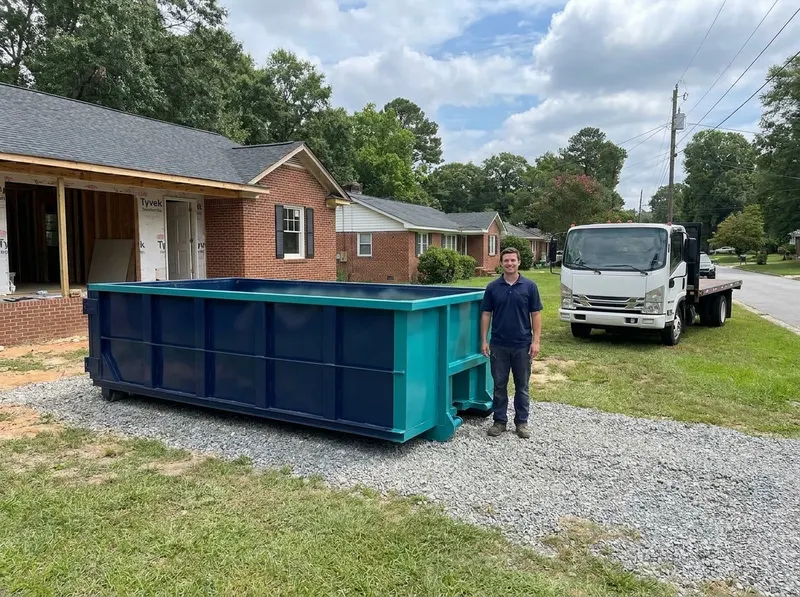
A construction or demolition project in Columbia generates debris volume that moves faster than a pickup truck can haul it. A single roof tear-off on a Heathwood bungalow produces 15 to 25 squares of shingles, roughly 2 to 3 tons, before the decking comes off. A kitchen gut in a Rosewood craftsman adds subflooring, cabinets, tile, and drywall in the same week. Having a bin on-site from day one keeps that material out of the driveway, off the lawn, and away from the red-clay soil that can stain a concrete pad for months in Richland County's wet winters.
Choosing the right container size is a practical calculation, not a sales upsell. The 10-yard bin holds roughly 4 pickup-truck loads and fits a bathroom demo or a single-square roofing repair, it clears a standard driveway in Forest Acres or Elmwood Park without blocking the garage door. The 15-yard holds about 6 loads and suits a kitchen renovation or a small deck tear-down. The 20-yard, at roughly 8 loads, is the most common choice for a full interior gut or a mid-size roofing job on a Wales Garden or Melrose Heights ranch. The 30-yard handles a whole-house renovation or a concrete slab break-up; the 40-yard is sized for commercial demolition, multi-unit work, or a large Fort Jackson-area contractor project generating mixed heavy and light debris over several days. If the debris is mostly concrete or brick, dense, heavy material, a smaller bin at the flat rate is often the smarter call than a larger one that will hit a weight ceiling with other carriers; the flat-rate structure here means the tonnage does not change the invoice.
Placement matters as much as size on Columbia job sites. Lots in historic Shandon and Earlewood often have narrow driveways and mature oaks that limit swing radius for the roll-off truck; a street placement may be needed, which requires a City of Columbia right-of-way permit, the driver can advise on the process, and the permit conversation should happen before the truck arrives, not after. Hollywood-Rose Hill and Heathwood properties tend to have wider lots and longer driveways, so side-yard placement is usually possible without a permit. For active Fort Jackson contractor work or any Richland County commercial site, confirm gate access and surface type (gravel, asphalt, or concrete) when booking so the driver can bring the right placement boards to protect the surface.
C&D dumpster rental is not the same service as junk removal: the crew does not load the bin. The trade-off is straightforward, the flat-rate bin costs less per cubic yard than a junk-removal crew, but the labor of loading is the contractor's or homeowner's responsibility. For a job site where debris is already being staged and the crew is on-site anyway, that trade-off is almost always favorable. For a one-day estate cleanout where loading help is the actual need, a junk-removal service is the better fit. Call (839) 280-1987 to talk through which service matches the specific project.
Every job gets a firm, written price after a free on-site visit.
Tell us about your construction & demolition dumpster rental job in Columbia and we'll send a clear, written quote, usually the same day.
 Debris Dumpster Rental Columbia